
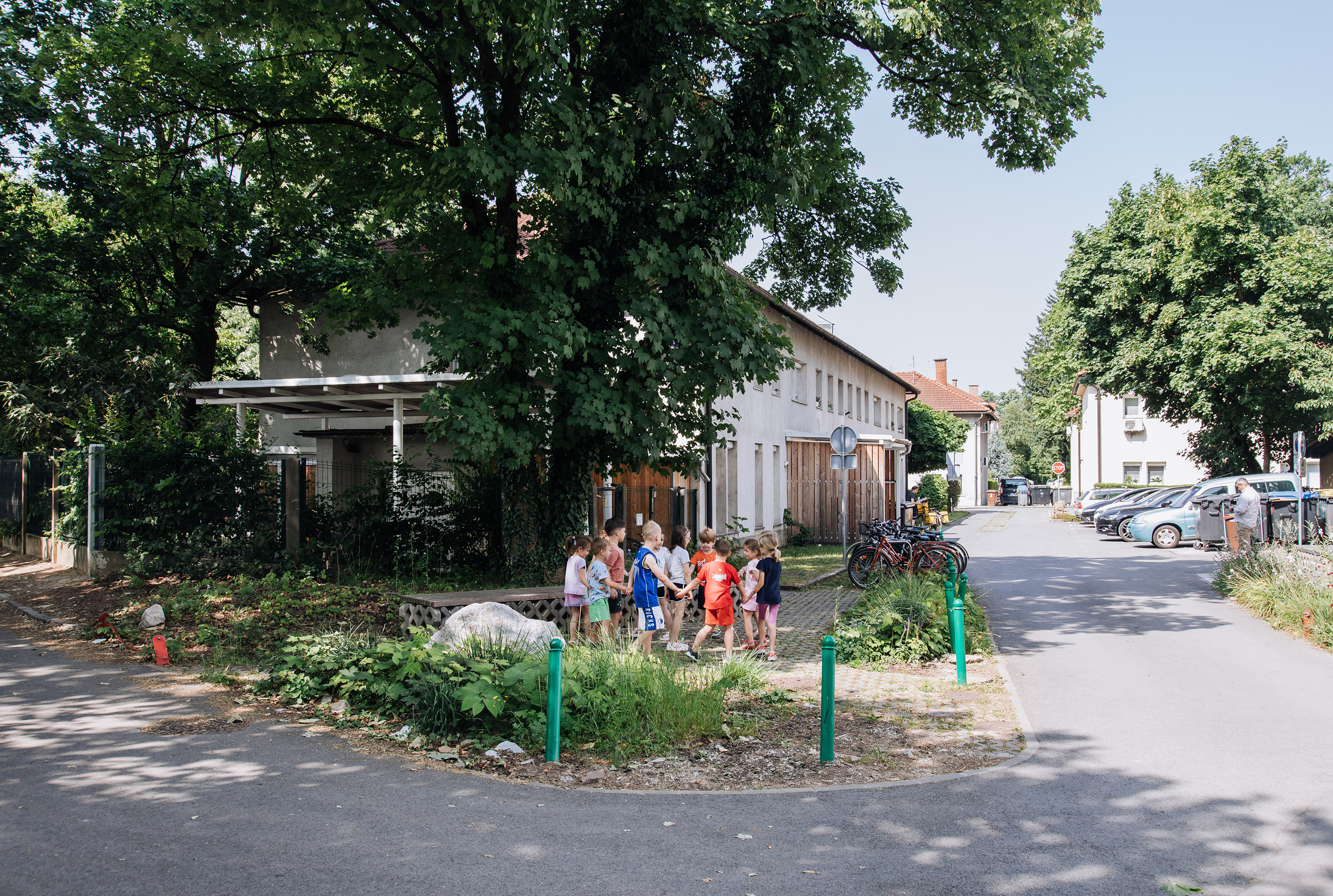
Many Slovenian kindergartens and schools are located on streets that offer poor conditions for walking or cycling, making driving a preferred way of bringing children to school. Moreover, some parents park their vehicles right in front of the entrance – on the pavement, in the middle of the road, or on bike lanes. This puts children at risk exactly at the times of day when most of them are arriving at and leaving educational facilities.
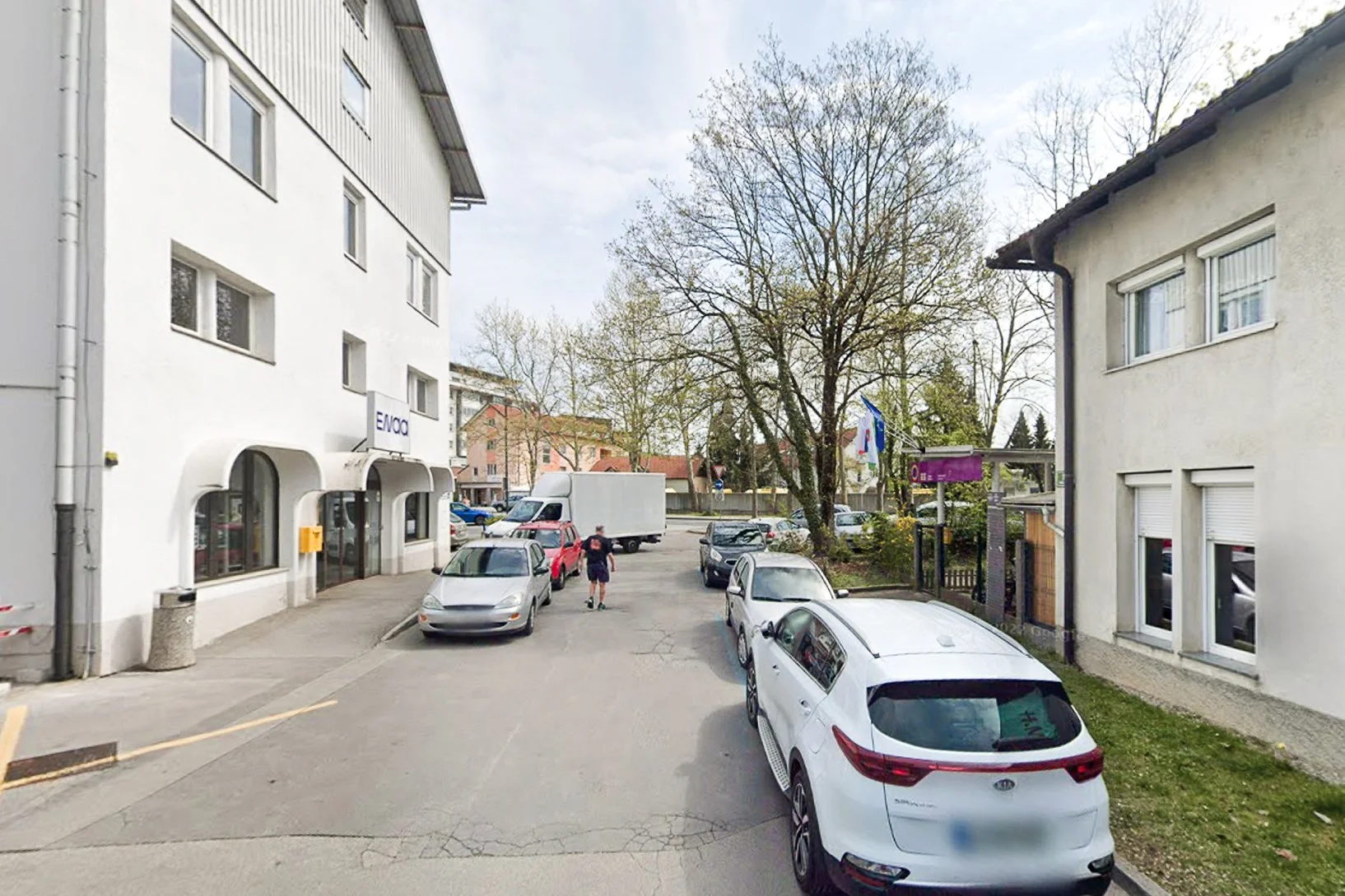
Cities such as Paris, Barcelona and Vienna recognised this problem some time ago and made safe, pedestrian-friendly school streets a priority: getting to school safely, comfortably and without a car.
Besides traffic safety, adaptation to climate change is becoming a key consideration in public space redesign in Ljubljana as well as elsewhere in the world. Permeable surfaces are one of the preconditions for “sponge city”: a city that works like a sponge, soaking up surplus water when there is too much of it, and releasing it when there is too little. More and more cities are depaving sealed surfaces, taking the pressure off the drainage system during downpours and creating new green areas that cool the air.
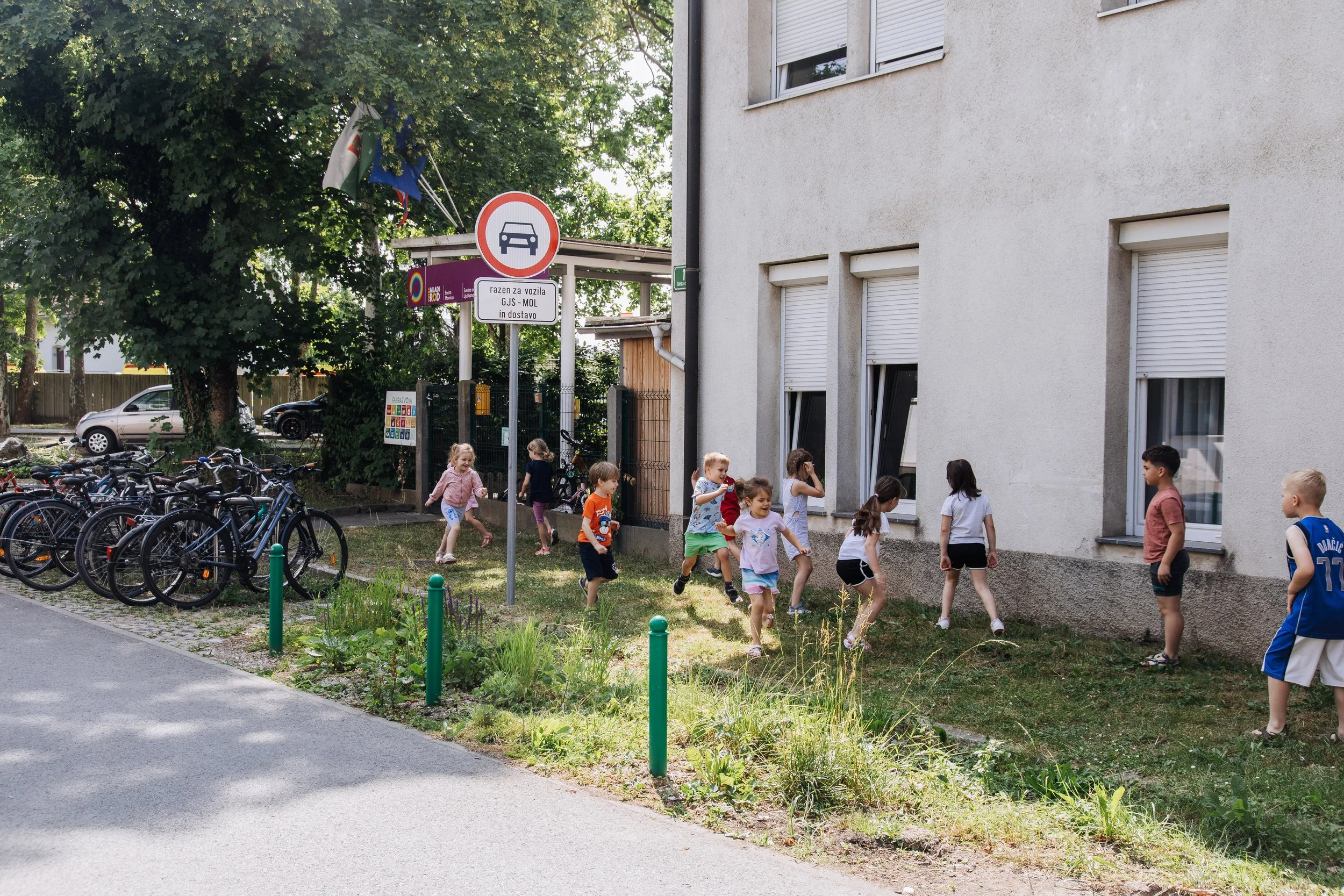
A pilot in depaving
An analysis of Ljubljana streets kindergartens are located showed that minor interventions on some of them could effectively calm traffic, prevent illegal car parking, and turn the freed-up space into permeable surfaces. We tested this approach with the redesign of Mislejeva Street.
At the time of planning, the street's sewerage was being rebuilt. Instead of restoring the street to its former state, we kept asphalt only where it is needed to keep the traffic moving and paved the rest with grass pavers. We have involved key stakeholders in designing the final layout and tested the new traffic regime at the same time. Surveys among parents and kindergarten teachers showed they think children want more greenery, more room to play, more benches and greater traffic safety in public space.
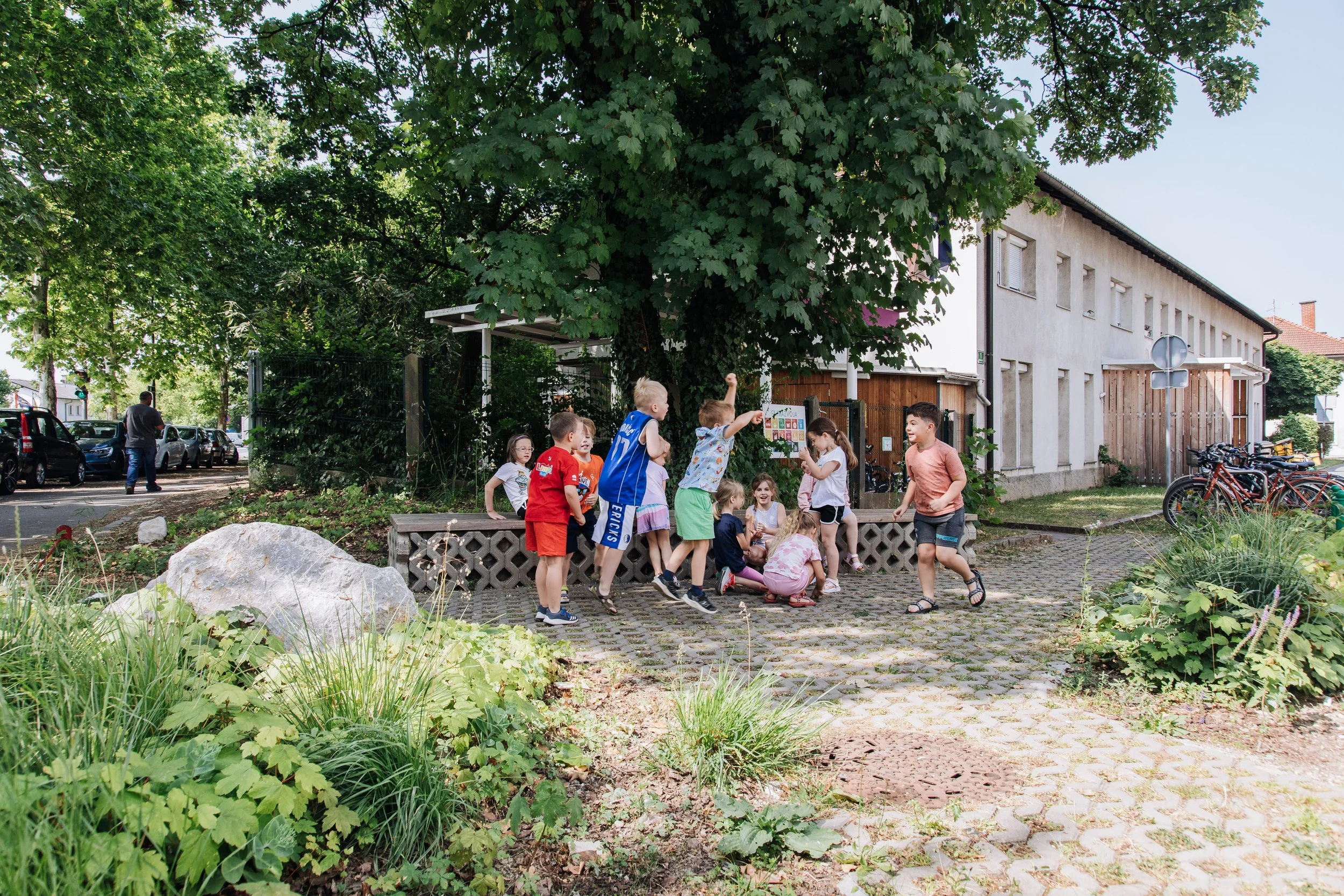
Less asphalt, more space for greenery, benches and bike racks
In the second phase, the entrance of the kindergarten became a space that communicates that the building belongs to kids. Narrowing the traffic lanes freed up new public space for bike racks, benches and a boulder that doubles as a climbing frame. 115 m² of asphalt was replaced with green, water-permeable surfaces, so heavy rain now soaks into the ground instead of running into an overloaded sewer. The street also gained 7.5 metres of benches, built from the grass pavers used for the temporary paving.
The planting is made up of perennials and shrubs that suit an urban, shaded setting and need little maintenance: viburnum, Japanese spiraea and red dogwood. Together with the children, we planted 475 plants.
The traffic regime changed as well: cars can no longer drive past the main entrance, which makes arriving on foot or by bike the easier option.
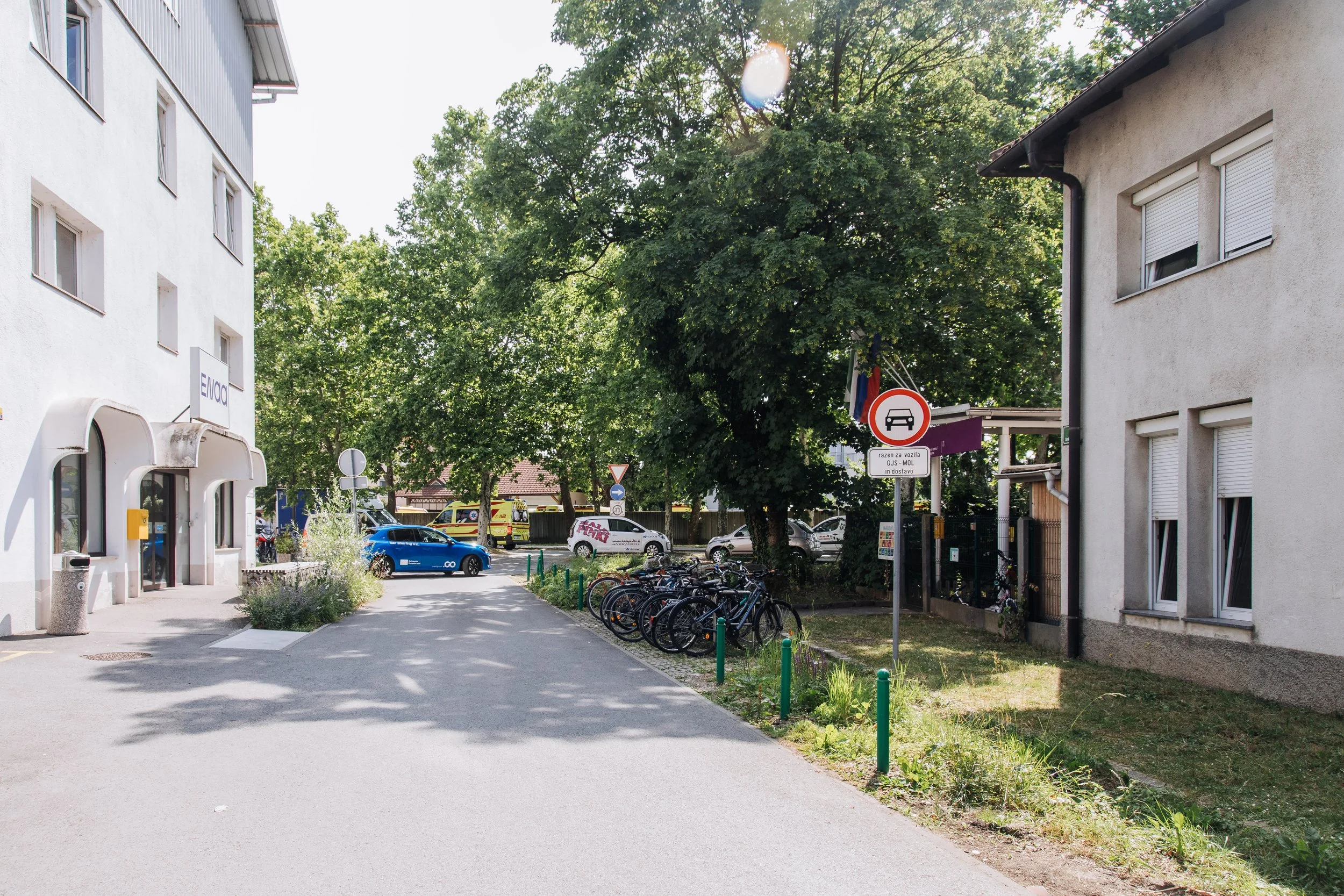
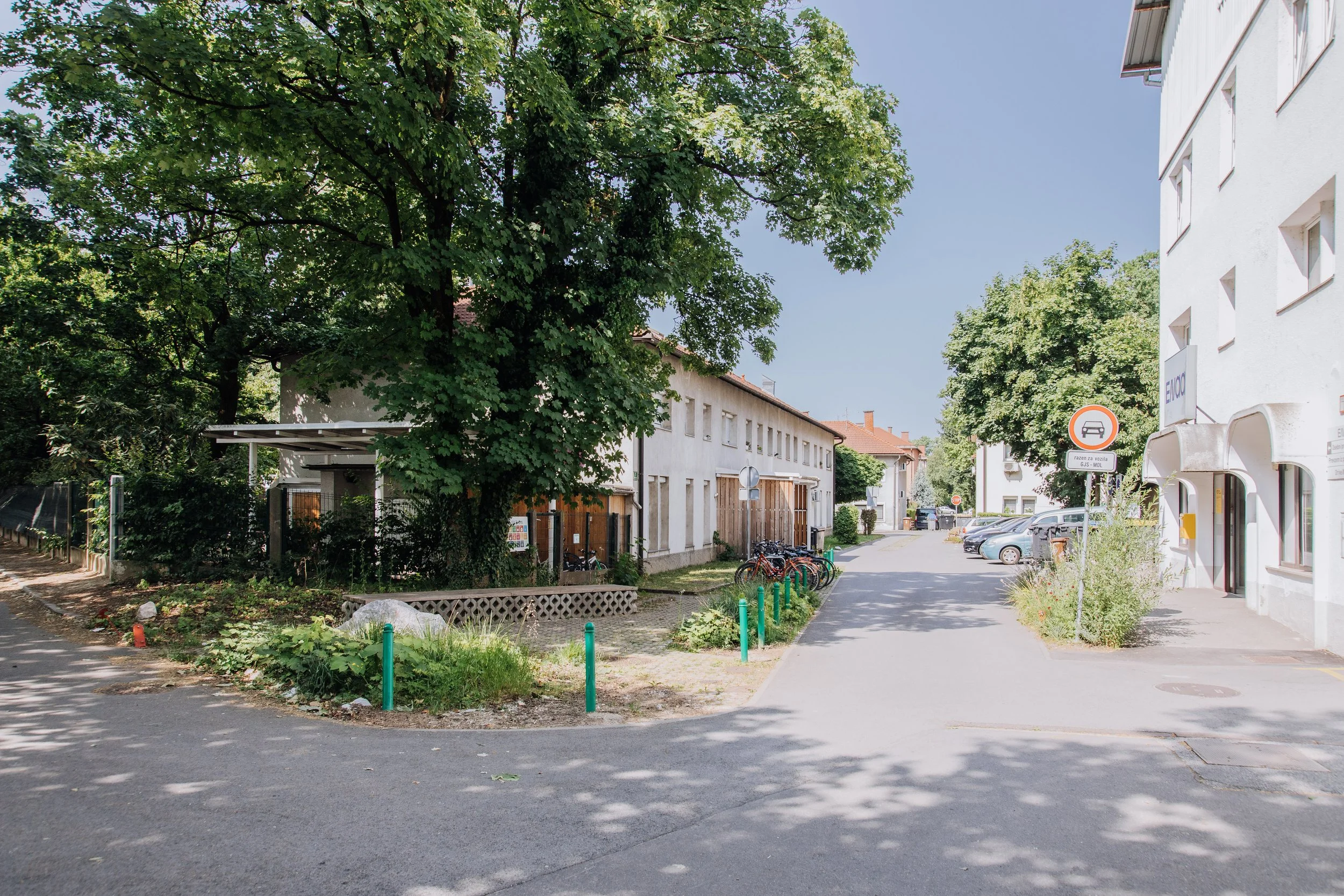
The redesign process was not as smooth as expected. Some drivers overlooked the sign announcing new traffic rules, damaging both their cars and the red fence that protected the plants in the initial design. It took taller bollards before every driver respected the new regime. Today the street outside the kindergarten on Mislejeva shows how low-budget, small interventions can change the character of a street and make it more comfortable and welcoming for its most vulnerable users.
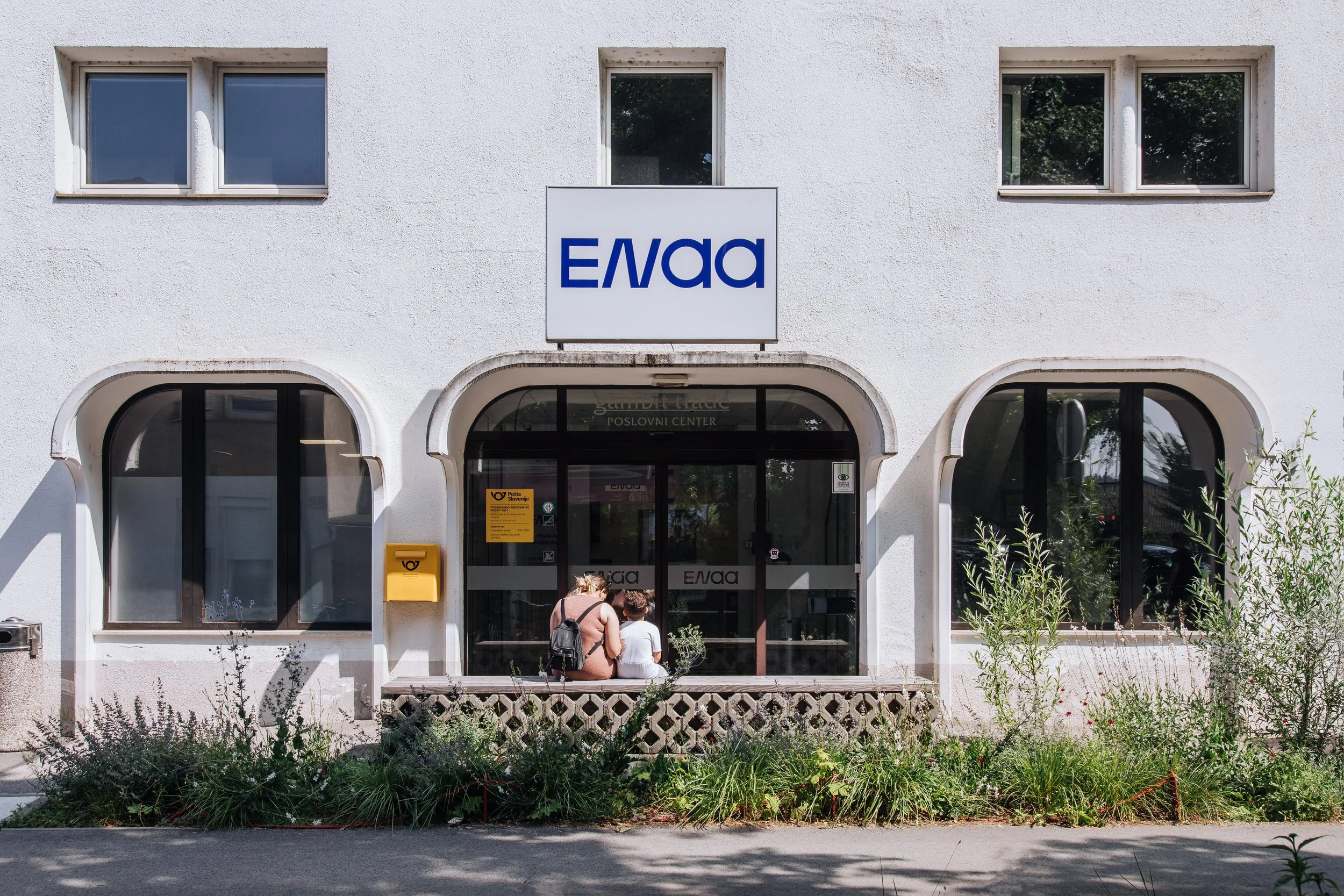
Ljubljana • Collaborators: Pazi park, Urška Alič, Dromos • Supported by: Enaa, Kindergarden Mavrica • Photo: Amadeja Smrekar • 2023