
Youth in Public Space, Ljubljana
The first study of how teenage girls and boys in Ljubljana use public space
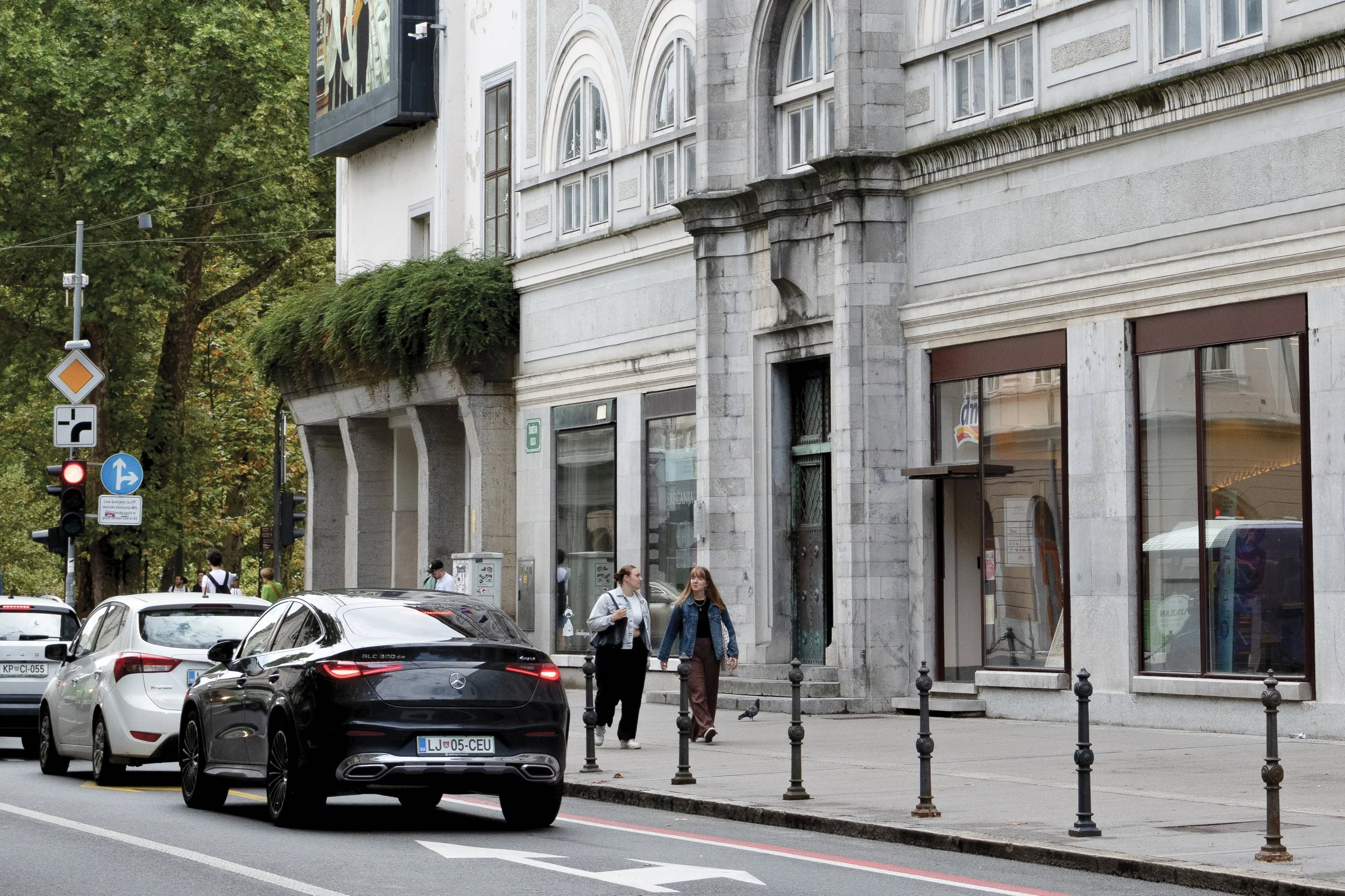
Public space matters enormously to teenagers. It is where they build their independence and their identity, where they form relationships with their peers and where they learn to live within a community. Ljubljana's squares, parks and streets are among the few places open to young people for spending free time without paying for it and without adults watching over them.
Yet in Ljubljana, as in many other cities around the world, teenagers are not always welcome in public space. The way they behave and spend their time there is quickly read as disruptive or inappropriate – that’s one of the reasons their needs are still overlooked when public spaces are planned.
More than 700 young people took part
The study looks at how girls and boys between the ages of 15 and 19 experience and use the city. Through semi-structured interviews, observation and surveys, we involved more than 700 young people from six Ljubljana secondary schools, and learned which public spaces they feel good in and which they do not, what obstacles they run into, and what differences there are between girls and boys, as well as between teenagers who live in Ljubljana and those who only come here for school.
Young people were also part of the research itself. The interdisciplinary team was made up of experts and students of psychology, sociology, urban planning and architecture, and the students had a key role both in carrying out the study and in interpreting and presenting the results.
Girls use and perceive public space differently
The findings reveal significant gender differences. Girls perceive subtle forms of exclusion in public space that boys largely do not notice. 43 % of boys consider Ljubljana's public spaces equally suited to both genders, yet only 28 % of girls agree.
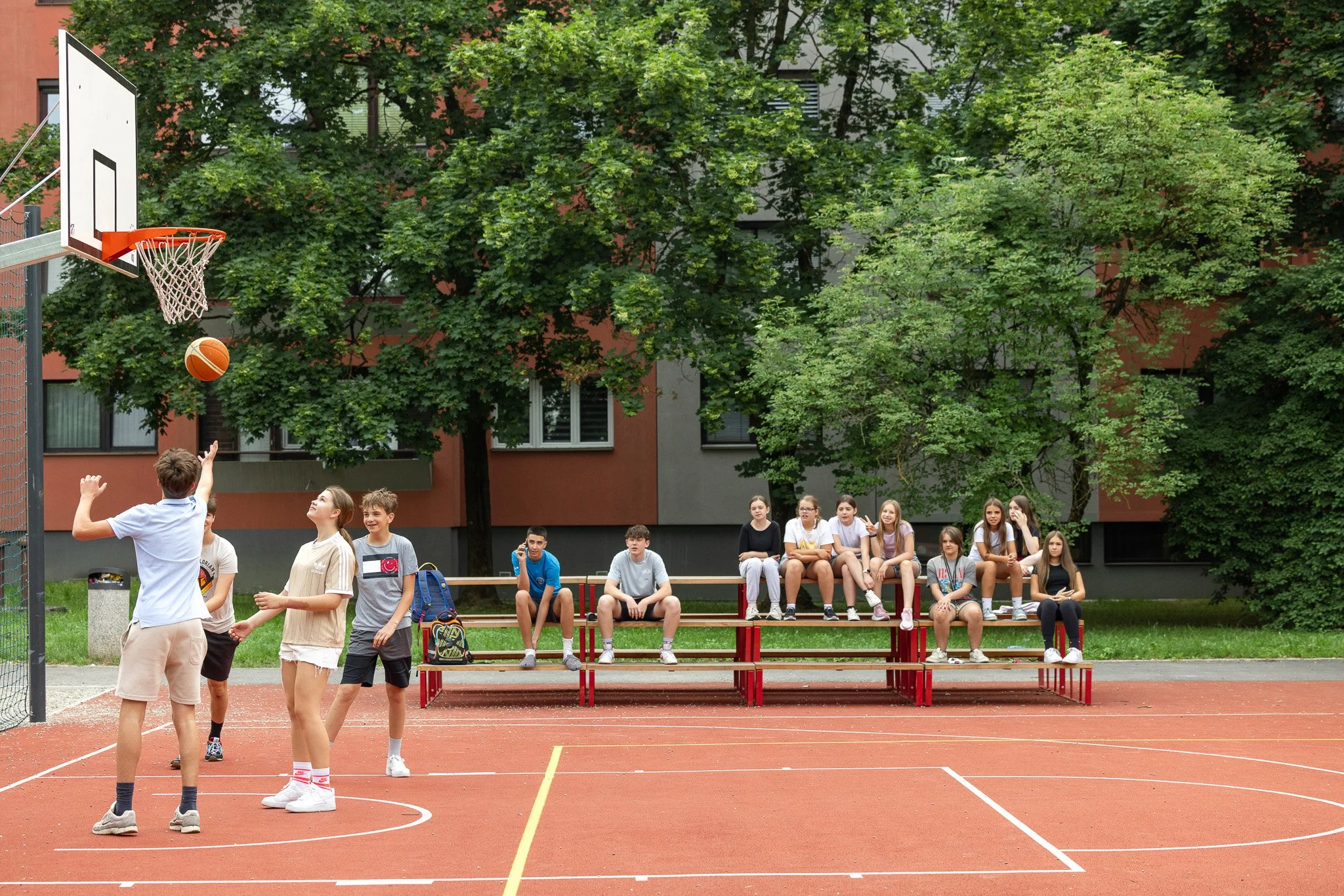
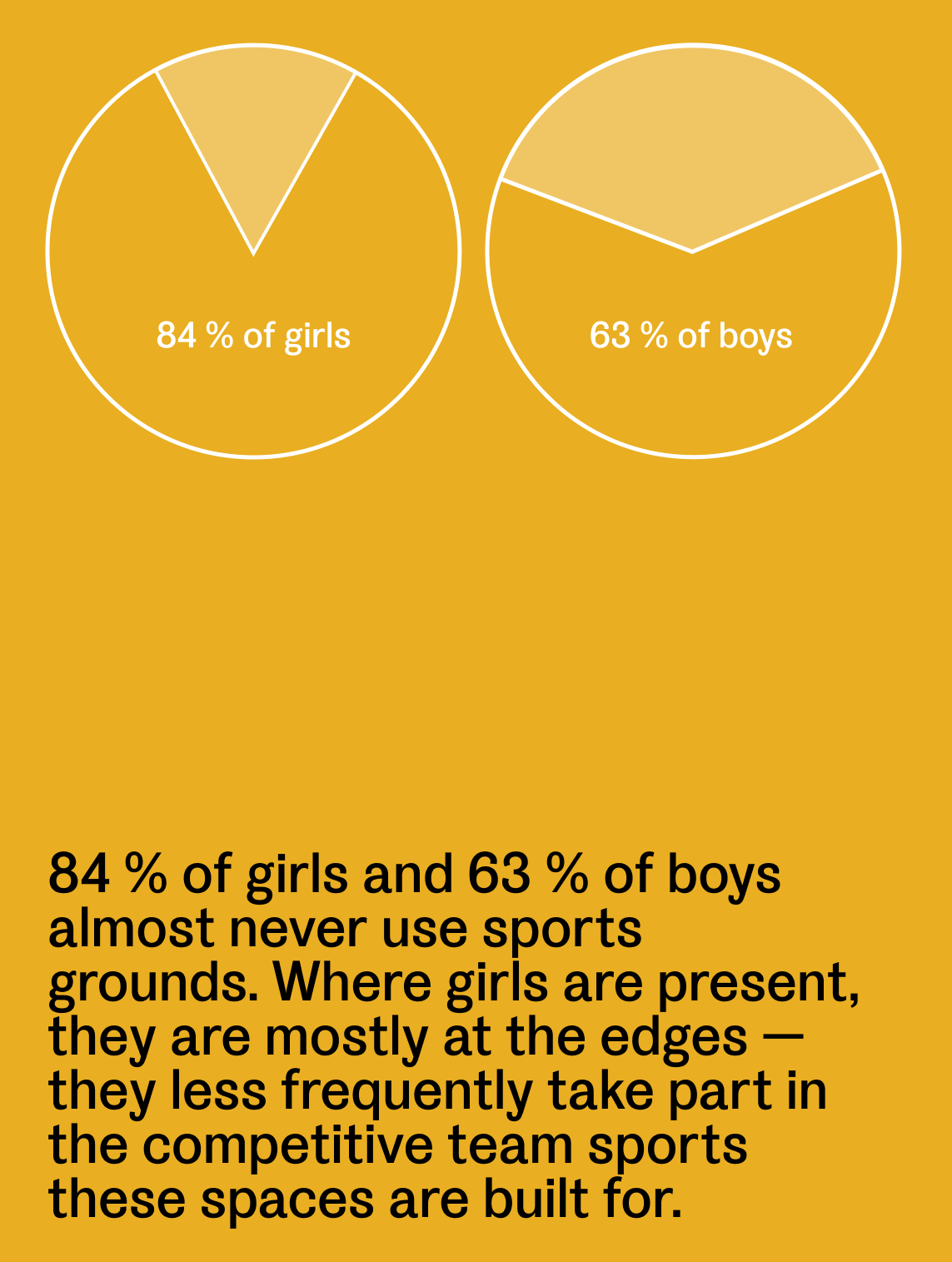
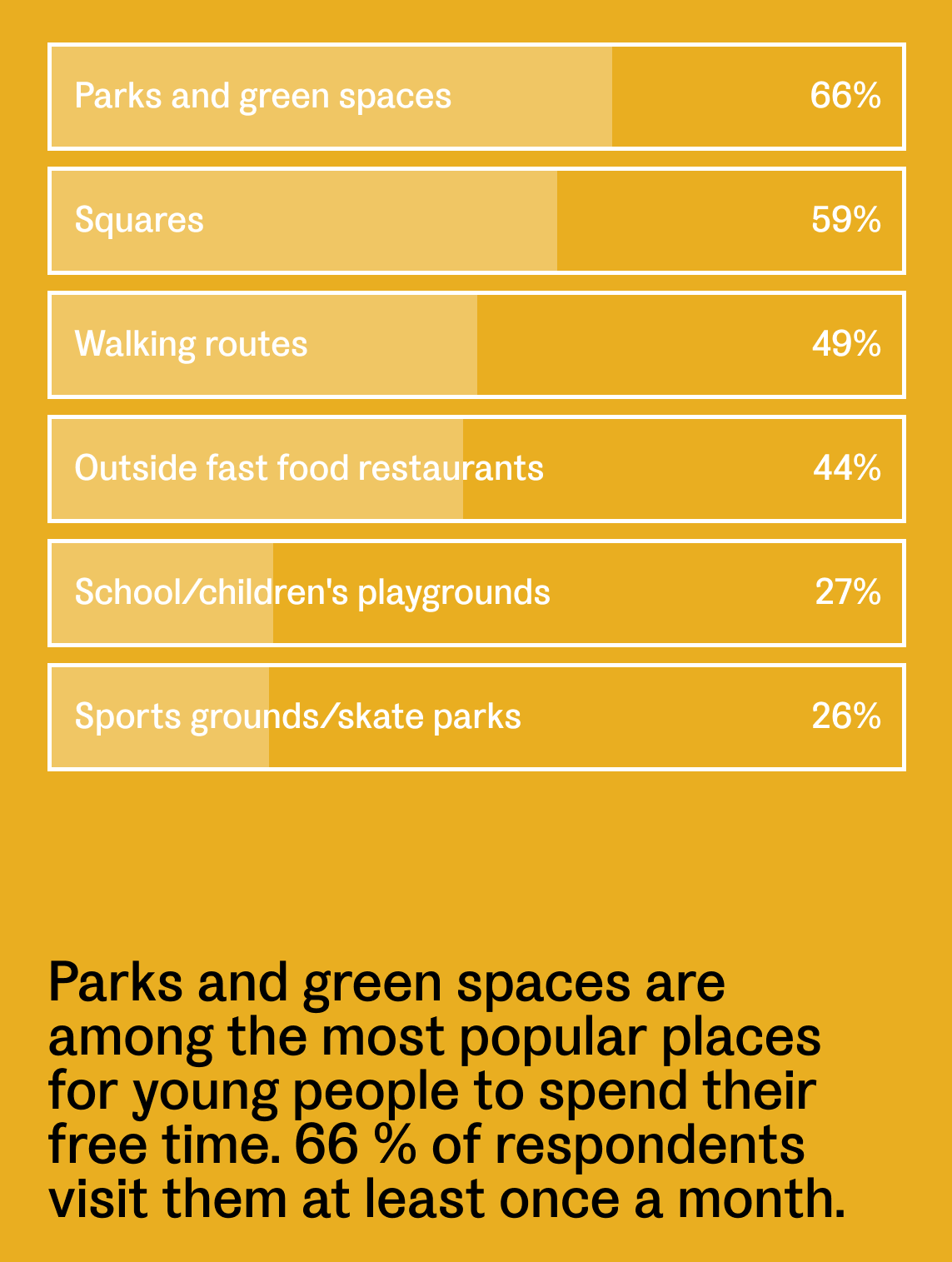
The difference in behaviour is clearest at sports grounds. 63% of boys and as many as 84% of girls almost never go to one. Where girls are present, they are mostly at the edges, since they less often take part in the competitive team sports the grounds are built for.
For girls, walking is one of the most important ways of using public space. Not as a means of getting from one place to another, but as the primary setting for conversation, socialising and exploring the city together. As one participant put it: "We mostly just walk around, we don't really settle anywhere, especially when I'm with my girlfriends. There's something about walking… We just keep walking. We do laps around the centre, talk, and see if anything interesting is going on around us."
Only one in ten young people think public spaces are suited to their needs
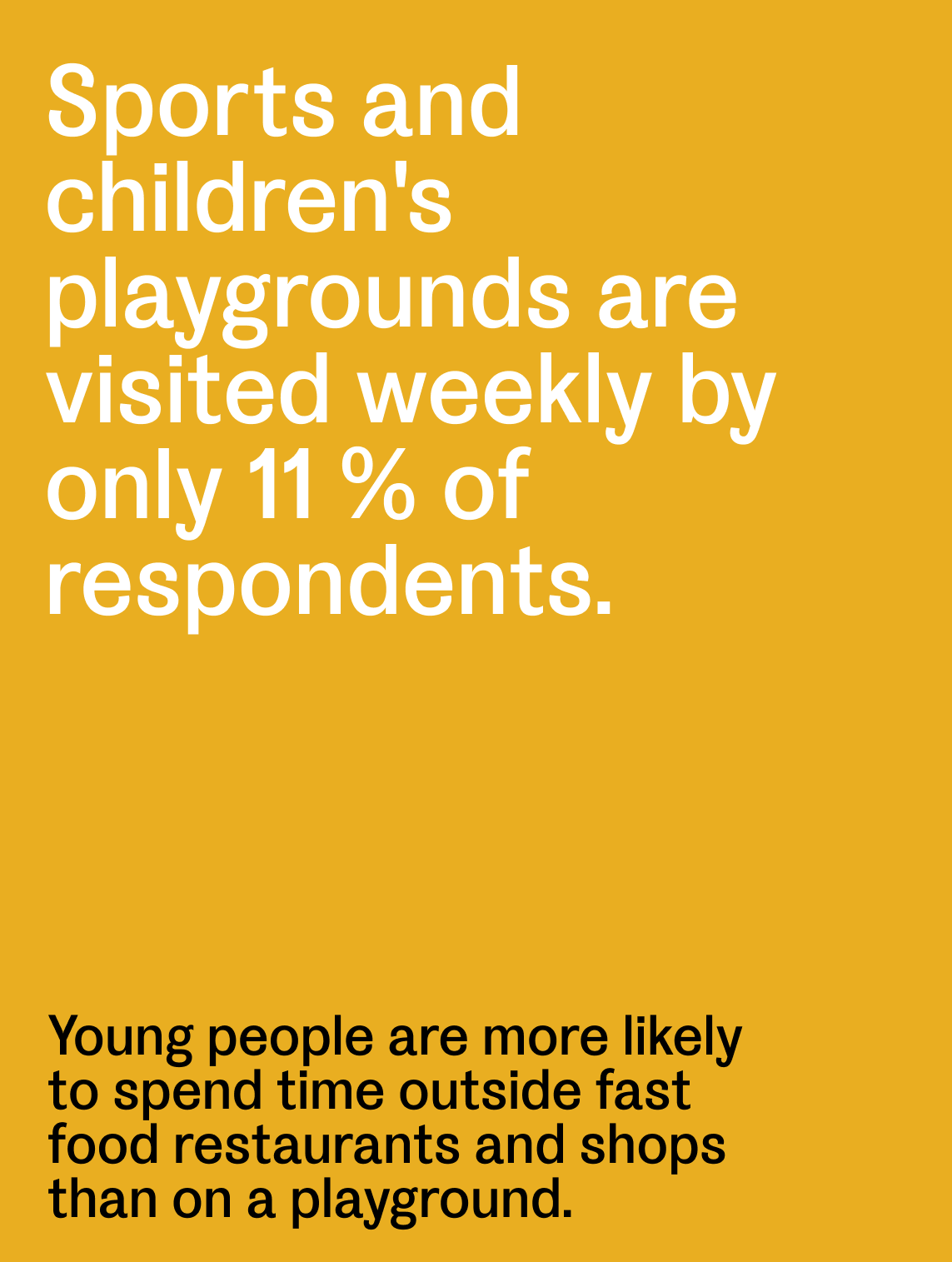
The study found an important paradox: the great majority of young people use neither children's and school playgrounds nor sports grounds. Only a tenth of them visit one at least once a week. Playgrounds are mostly designed for competitive team sports or for younger children, which does not answer the needs of most young people. They are more likely to find their place outside fast food restaurants and shops than on a playground.
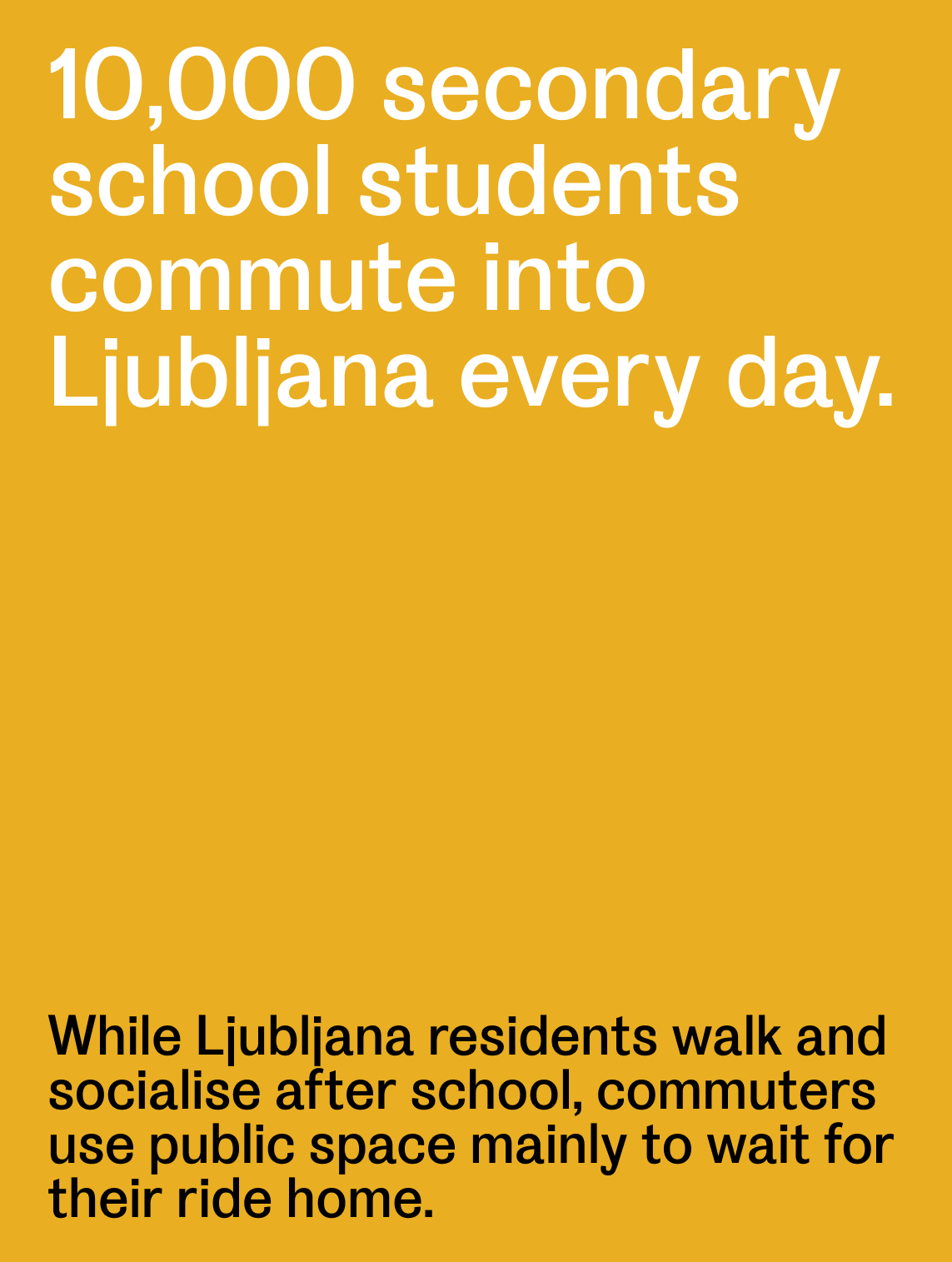
A second important finding concerns commuters. Ten thousand secondary school students travel into Ljubljana every day. Those in our study experience public space above all as a waiting room: while teenagers from Ljubljana walk around the city and meet up spontaneously, commuters use public space after school mainly to wait for their ride home.
Safety and greenery matter
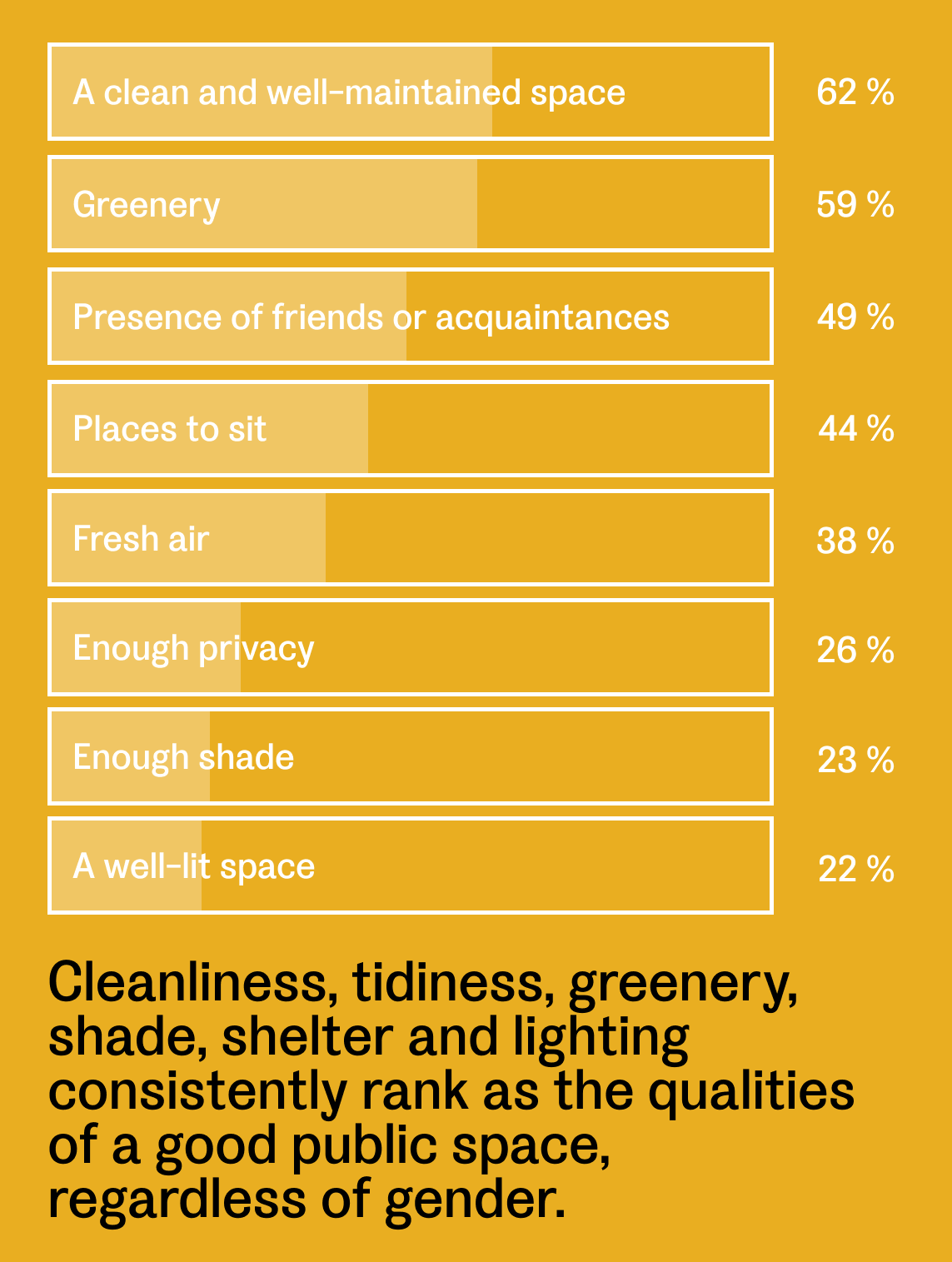
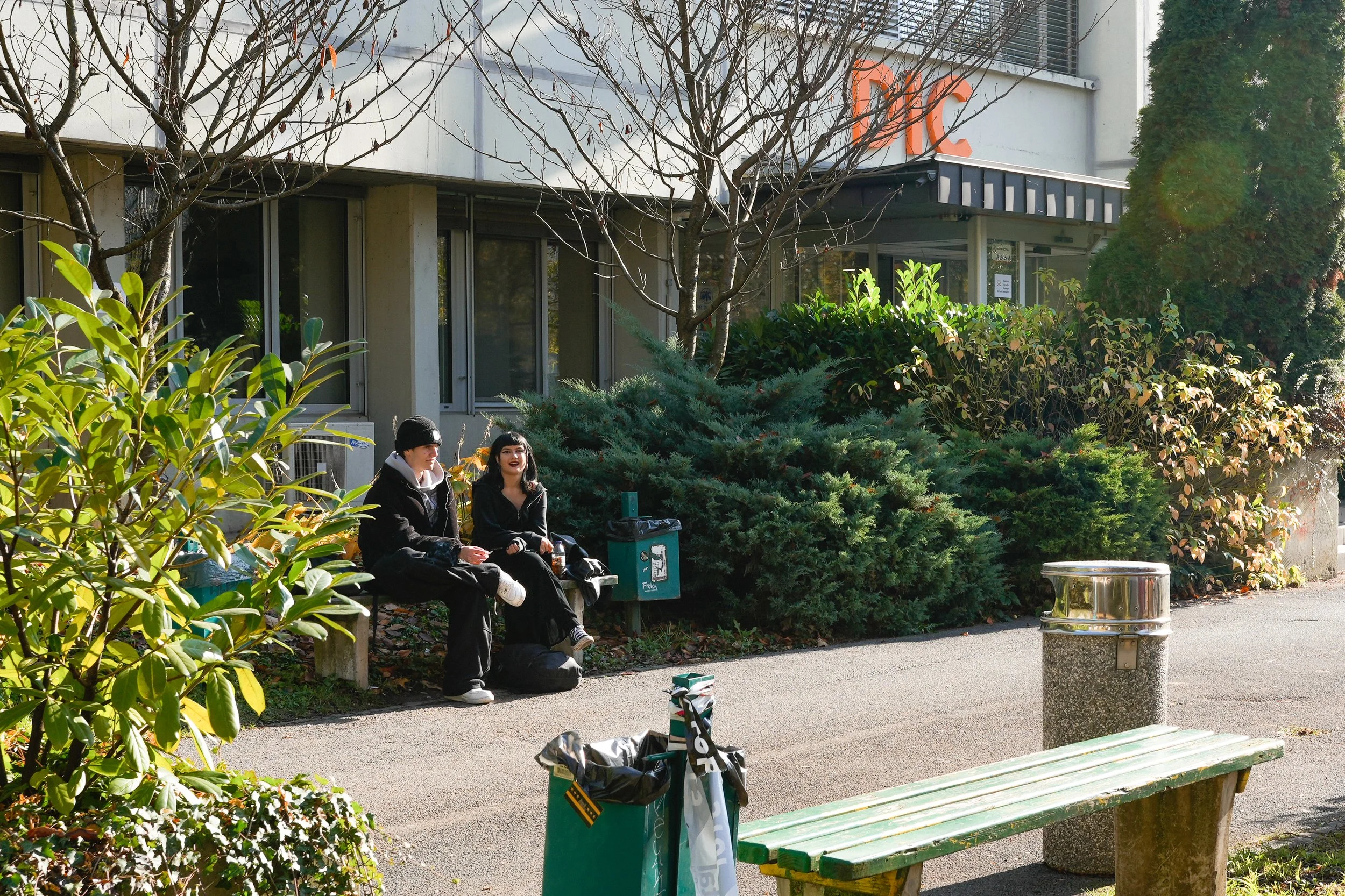
Most young people feel safe in Ljubljana (70 % of girls and 80 % of boys) but that sense of safety depends on the presence of others. 55 % of respondents named friends or acquaintances as one of the key reasons they feel comfortable in public space, which is why they gravitate toward lively squares, plazas and streets outside cafés, where they can observe, join the scene and run into people they know. At the same time, excessive crowding is one of the main drivers of discomfort, particularly among girls.
Upkeep, cleanliness, greenery, lighting and shelter from heat and rain are the qualities of a good public space mentioned most often, regardless of gender. Parks and waterside paths – most often Tivoli, Rožnik and the banks of the Ljubljanica – are teenagers' favourite places, because they combine calm, fresh air and contact with nature.
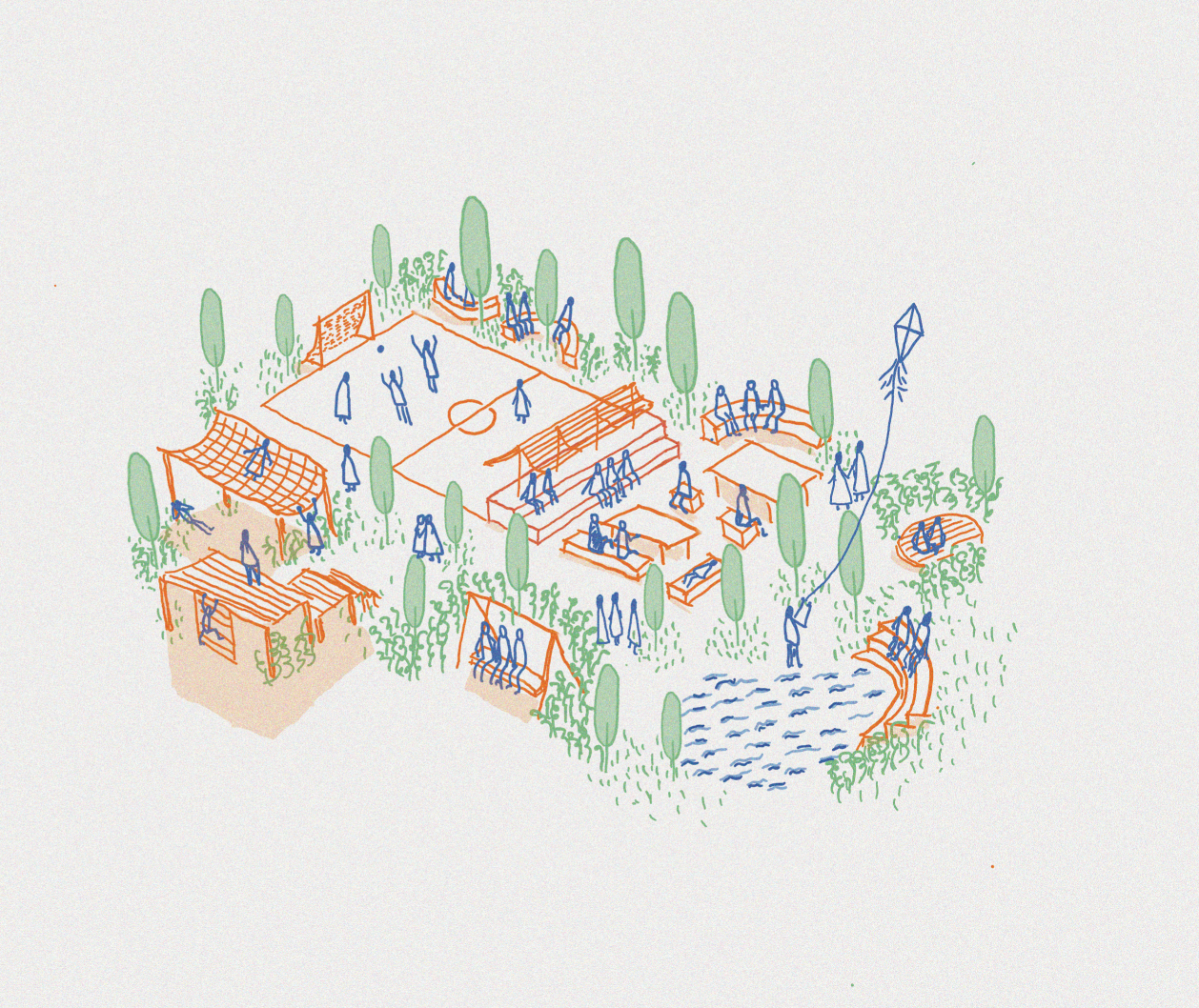
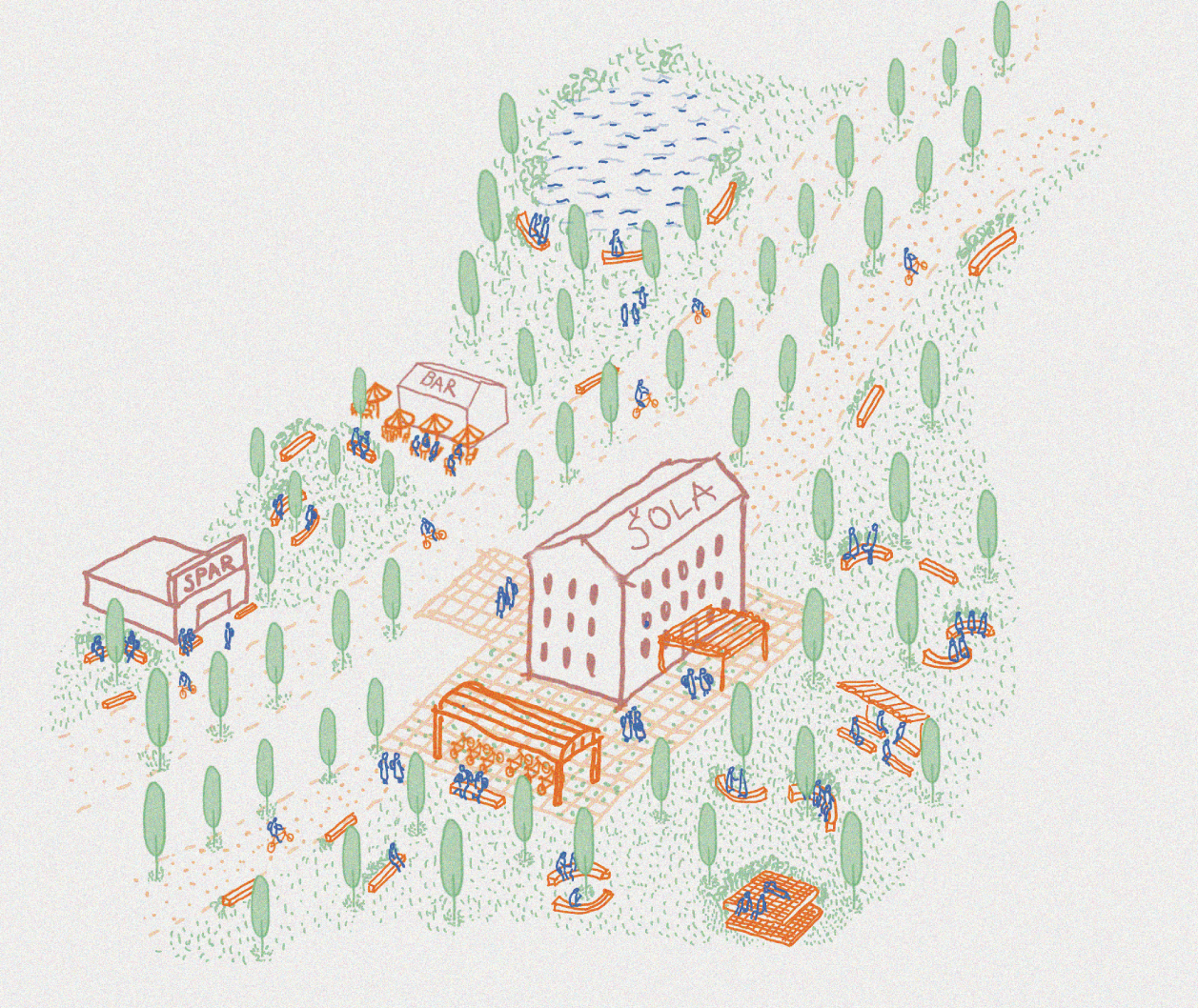
Young people are capable partners who want to be included in city planning.
At a time when mental health difficulties among young people are on the rise, access to inclusive, green public space matters greatly. So does the careful design of spaces for social life: taking part in what goes on strengthens a young person's sense of connection to the wider community and reduces feelings of loneliness and alienation. How readily young people engaged with the study shows that they recognise these needs themselves – almost half of those involved want to help shape the city's public spaces. Spaces they will not merely use, but experience as their own.
Ljubljana • Partners: Ana Šemrov (Department of Psychology, Faculty of Arts, University of Ljubljana), Urška Česnik (TiPovej!) • Contributors: Tilen Bradeško, Gita Erznožnik, Taja Ivanc, Klara Jamnik, Pia Križan, Eva Košmrlj, Tilen Mavrič, Lana Požlep • Graphics: Lana Požlep • Illustrations: Tilen Mavrič • Photography: Matjaž Tančič, Vesna Skubic, Lana Požlep • Supported by: Republic of Slovenia, Ministry of Higher Education, Science and Innovation; European Union – NextGenerationEU; HUD Fund, University of Ljubljana • 2025